 TruVet Pet Care Clinic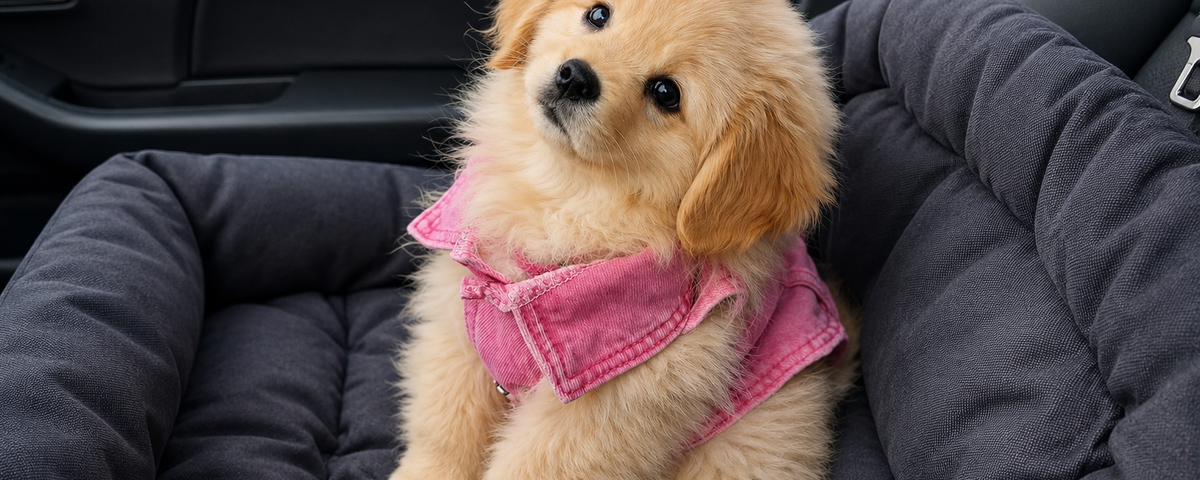
That adorable head tilt your dog gives you every time you talk to him is not just cute, it is genuinely fascinating science. Here's what researchers actually found, and the one situation where the same head tilt should worry you instead.
Why Does My Dog Tilt Its Head? The Science Behind the Cutest Canine Behaviour
By Dr. Brajmadhuri, TruVet Pet Care Clinic, Sector 79, Gurgaon
Every dog owner knows the moment. You say something in an unusual tone, or you use a word your dog seems to half recognise, and his head tips gently to one side, ears perked, eyes fixed on you as if he is really trying to work something out. It is one of the most photographed, most shared, most universally adored things a dog does, and for a long time nobody had actually studied why it happens.
That changed a few years ago, and the answer turns out to be more interesting than most people expect.
What researchers actually found
A team at the Family Dog Project in Budapest, one of the world's leading centres for studying dog behaviour and cognition, ran an experiment specifically to understand head tilting. They worked with a small group of dogs known informally as gifted word learners, dogs who could reliably learn and remember the names of dozens of different toys, alongside a larger group of typical dogs without that particular skill.
The results were striking. The gifted word learners tilted their heads in a large majority of trials when asked to fetch a toy by name, while the typical dogs barely tilted their heads at all in the same situation. The researchers concluded that head tilting seems connected to processing something meaningful, something the dog is genuinely trying to understand or recall, rather than being a random quirk or a simple reaction to sound.
In other words, that classic head tilt may be a small window into a dog actively thinking, trying to match what he is hearing to something he already knows.
The other leading theory
There is a second, older explanation that many veterinary behaviourists still consider alongside the newer research, sometimes called the muzzle interference idea. A dog's long muzzle can partially block his own view of a person's mouth and face while listening. Tilting the head shifts the muzzle out of the way, giving the dog a clearer look at your facial expression and mouth movements while he listens, both of which carry useful information about what you mean and how you feel.
These two explanations are not necessarily in competition. It is entirely possible that a dog tilts his head partly to see better and partly because he is engaged in genuine mental effort, trying to connect a sound to something meaningful. Flat faced breeds with short muzzles, interestingly, tend to tilt their heads less often than long muzzled breeds, which fits neatly with the muzzle interference idea.
Why some dogs do it more than others
Not every dog tilts his head the same amount, and that is worth understanding rather than worrying about. Breed, muzzle shape, hearing ability, and simple personality all play a role. A young, alert, highly food or toy motivated dog will often tilt more than an older, more laid back dog who has heard the same words a thousand times already and no longer needs to work at understanding them. None of this means one dog is smarter than another. It mostly reflects how much active, effortful listening is happening in that particular moment.
When a head tilt is not the cute kind
Here is the part that genuinely matters from a health standpoint, and the reason this piece is worth reading past the adorable video clips. A head tilt that appears briefly during a conversation with your dog, and then goes away once he loses interest or gets distracted, is completely normal and nothing to worry about.
A head tilt that does not go away, that your dog holds constantly or almost constantly, is a very different matter. This kind of persistent tilt is a classic sign of a problem with the vestibular system, the part of the body responsible for balance, which can be affected by an inner or middle ear infection, inflammation, or in older dogs a condition often called old dog vestibular syndrome. Along with a constant tilt, watch for the following:
- Stumbling or general loss of coordination
- Circling in one direction
- Unusual eye movements that look like flickering or darting side to side
- Nausea or vomiting
- Reluctance to stand or walk normally
Any combination of these alongside a head tilt that will not resolve is a reason to see a vet promptly rather than waiting to see if it passes on its own.
The key difference is simple. A brief, situational tilt during play or conversation is charming and completely normal. A constant, unrelenting tilt, especially paired with balance problems, is a medical sign that deserves a proper look.
What this means for how you talk to your dog
If you enjoy watching your dog tilt his head, and most owners genuinely do, there are a few things that seem to encourage it. Using a clear, distinct tone, saying a specific word he already half knows, or asking a question in a slightly different pitch than your normal speaking voice all seem to prompt more head tilting in dogs who are actively trying to listen and understand. It is a small, harmless way to interact with your dog that also happens to give you a little window into how much he is genuinely engaging with what you are saying.
The TruVet takeaway
The head tilt is one of those rare cases where the science actually backs up what dog owners have always suspected, that their dog is really listening and really trying to understand. It is not a trained behaviour and it is not random. It reflects genuine mental effort and possibly a practical need to see your face more clearly while he listens. Enjoy it for what it is, and simply keep an eye out for the one version of it that is not cute at all, a tilt that never lets go, since that one deserves a vet visit rather than a video clip.
TruVet Pet Care Clinic is at Shop No 4-6, opposite Bestech Park View Altura, Sector 79, Naurangpur, Gurugram, Haryana 122051. Dr. Brajmadhuri personally examines every patient, and we are open all seven days from 10am to 8pm for OPD consultation, vaccination, deworming, surgery, and health checkups for dogs and cats. If your dog's head tilt has you concerned, WhatsApp us at +91 98710 10355 and we will take a look.
Frequently asked questions.
My dog tilts his head every single time I talk to him. Is that unusual?
Not at all. Some dogs are simply more expressive listeners than others, and dogs who are highly food or toy motivated, or who are still young and eager, often tilt their heads more frequently than calmer or older dogs.
Does head tilting mean my dog understands actual words?
To some extent, yes, at least for dogs who have learned to associate specific words with specific objects or actions. The tilt seems linked to the effort of recognising and recalling something meaningful, which suggests real understanding rather than a simple reflex.
My dog never tilts his head. Does that mean something is wrong?
No, this is simply normal variation. Breed, muzzle length, hearing, and personality all affect how often a dog tilts his head, and plenty of perfectly healthy, attentive dogs rarely do it at all.
How can I tell the difference between a cute tilt and a worrying one?
A cute tilt is brief and happens in response to something specific, like your voice or a word, and it goes away once your dog loses interest. A worrying tilt is constant, does not resolve, and is often paired with stumbling, circling, or unusual eye movements.
Can ear infections cause a head tilt even in young, healthy dogs?
Yes, ear infections are a common cause of a persistent head tilt at any age, not just in seniors, so this is worth checking regardless of your dog's age if the tilt does not go away.
What should I do if I notice a constant head tilt?
Book a vet visit rather than waiting. A physical exam, including a look inside the ears and a basic neurological check, will help work out whether this is an ear problem, a vestibular issue, or something else that needs treatment.
Questions for Dr. Brajmadhuri?
Open all 7 days, 10am to 8pm. Walk-in OPD welcome.